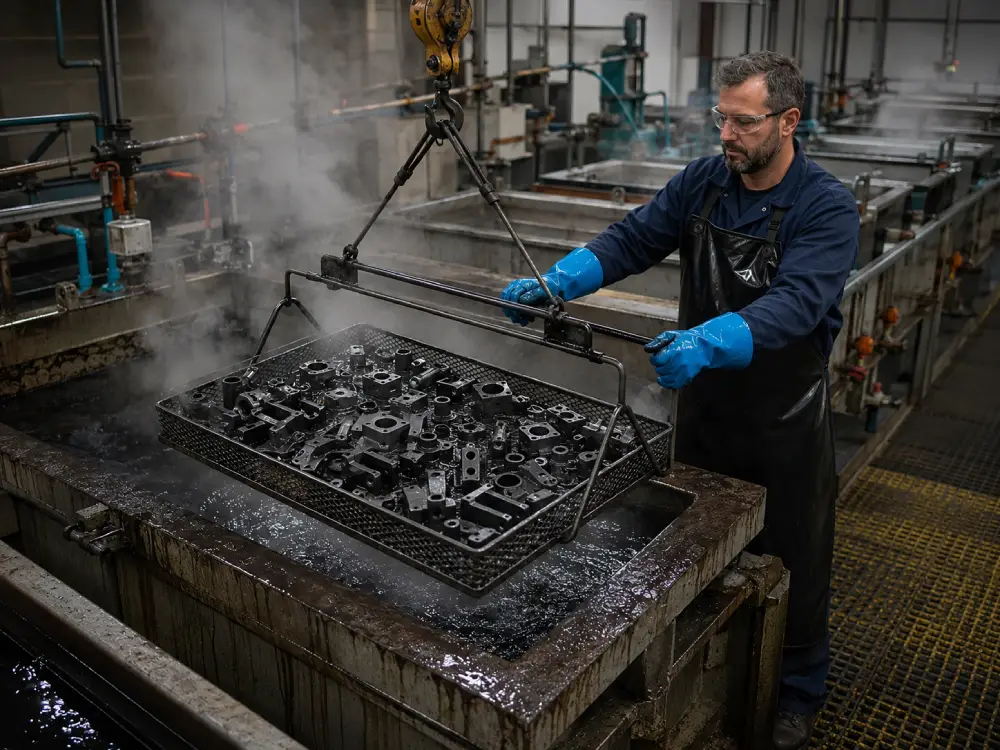
What Is Hot Chemical Blackening Heat Treatment?
At Subcon Group, hot chemical blackening provides a durable black oxide finish for ferrous metal components while maintaining dimensional accuracy. Using controlled processing and engineering expertise, we deliver consistent, high-quality surface treatment solutions for manufacturers across the UK.
What Is Hot Chemical Blackening Heat Treatment?
In UK Precision Engineering, hot chemical blackening is a specialist surface treatment applied to ferrous metal components to create a clean, uniform black oxide finish.
Also known as chemical blackening, steel blackening or black oxide treatment, this conversion process is vital for manufacturers that require a practical balance between appearance, dimensional control and functional surface protection.
Hot chemical blackening is commonly used in precision component finishing, industrial surface treatment, tooling manufacture, machinery builds and general engineering applications. When sealed correctly, the black oxide coating can also support improved corrosion resistance and provide a low-glare surface finish suitable for demanding workshop and production environments.
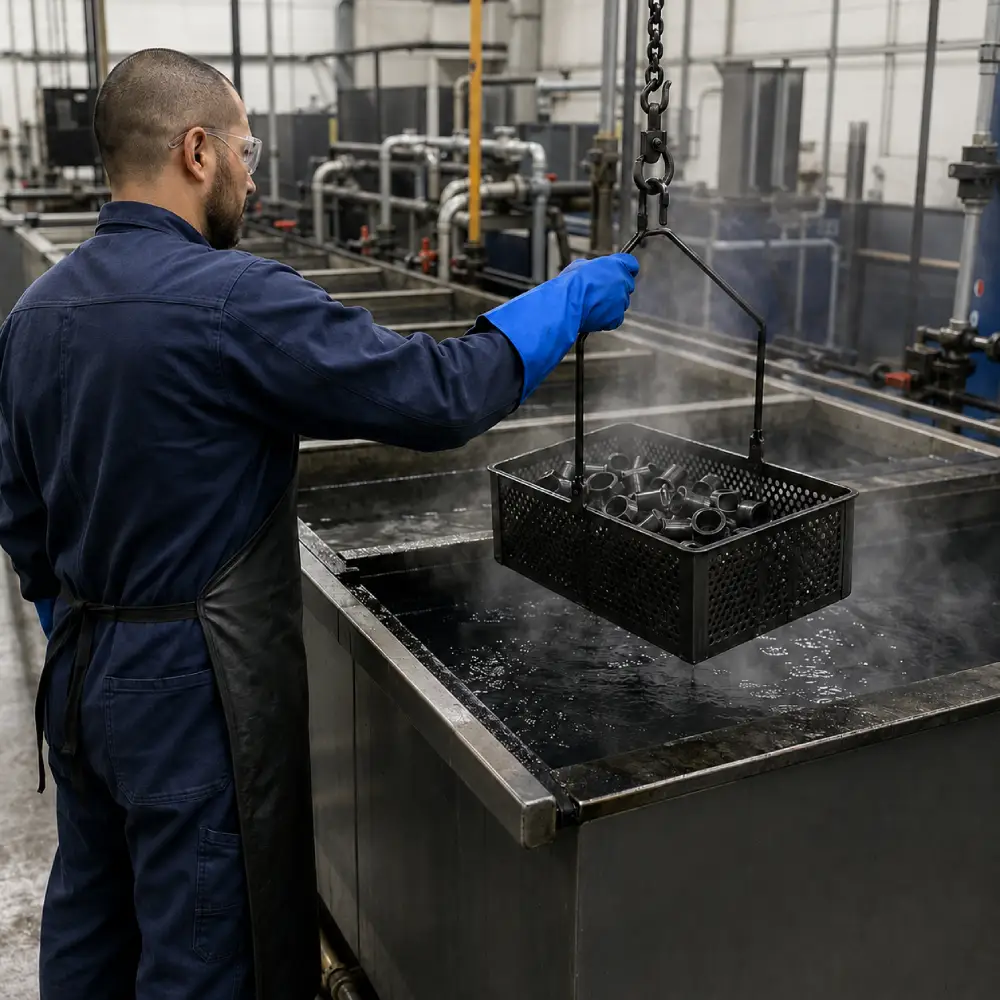
As an alternative to paint, powder coating or heavier plating methods where a low-build surface finish is required, parts such as fasteners, shafts, spacers, brackets, collars, pins, tooling components and CNC machined components benefit from a professional black finish without compromising fit, movement or assembly performance.
Subcon Group combines trusted technical expertise, controlled processing and wider heat treatment services to deliver a consistent black oxide finishing with excellent dimensional stability and improved corrosion support for functional engineering applications.
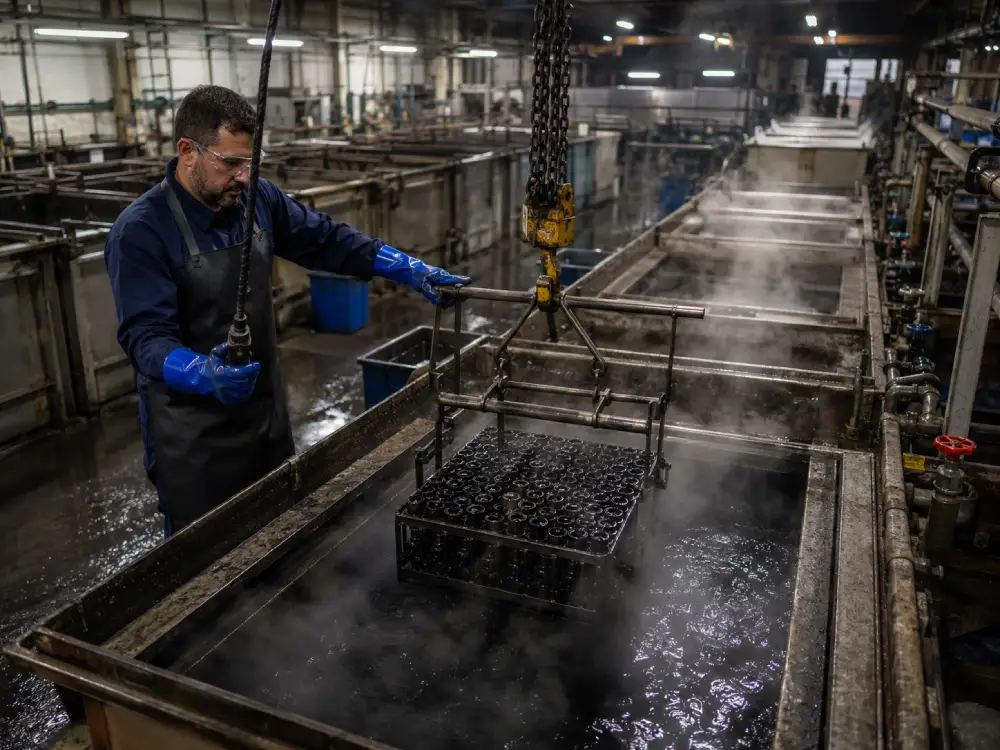
Hot chemical blackening is a controlled surface conversion process that chemically darkens the steel surface to create a consistent black oxide finish. The quality of the finish relies on precise preparation, stable process control and thorough post‑treatment sealing. Subcon Group’s highly experienced engineers manage each stage with accuracy and efficiency, ensuring every component receives a reliable, uniform and dimensionally stable black oxide coating.
Component Review
Subcon Group specialist team firstly inspect components to determine the parts suitable for hot chemical blackening. Material type, surface condition, machining quality and end-use requirements are all considered. This is especially important for precision machined components, where the final black oxide finish must support both appearance and performance.
Pre-Treatment Cleaning
Once reviewed and before chemical blackening begins, the workpiece must be thoroughly cleaned.. Oils, cutting fluids, grease, swarf, residue and other surface contaminants are methodically removed to ensure the steel blackening process reacts evenly with the component surface.
Chemical Blackening Treatment
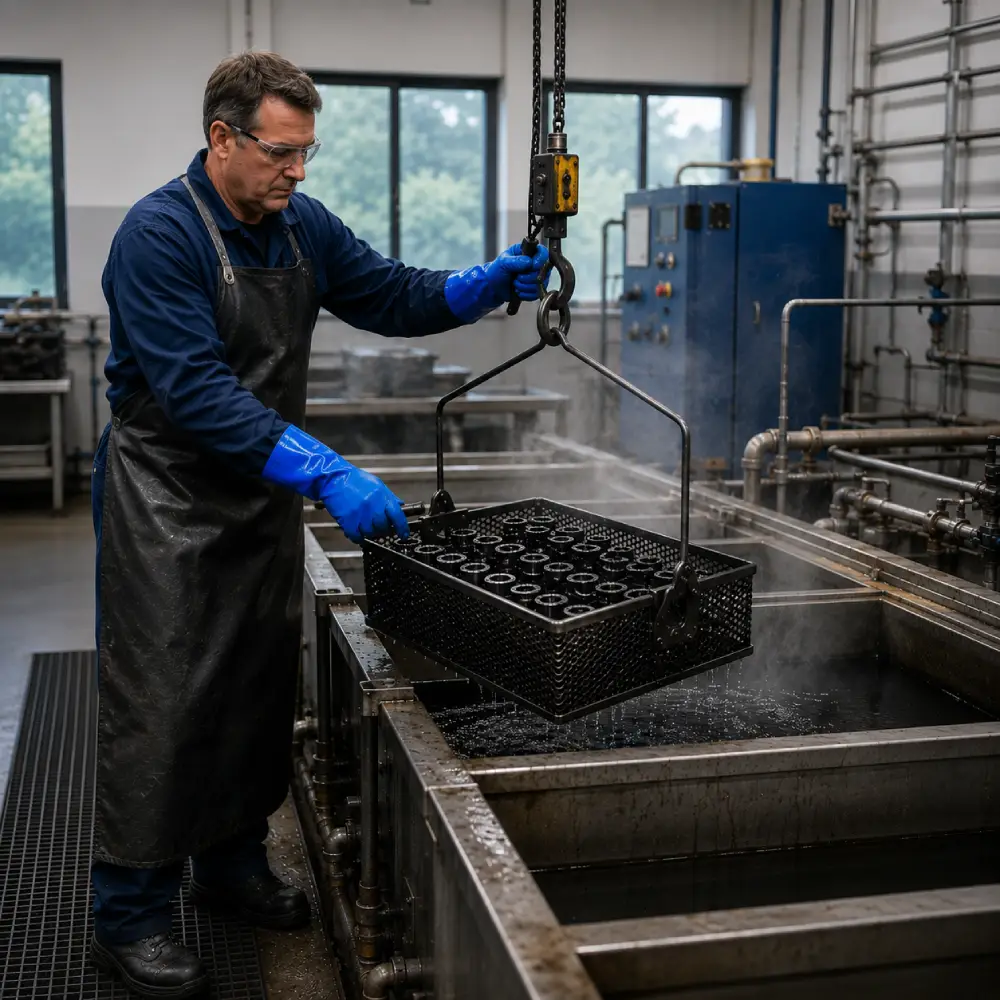
The prepared component is then expertly processed by Subcon Group machinists through a heated chemical blackening solution. This stage creates the dark black oxide finish associated with hot chemical blackening heat treatment. As the process converts the surface rather than building a thick external layer, it makes it ideal for close-tolerance parts, threaded components and precision assemblies.
Rinsing and Stabilisation
After the chemical treatment stage, components are rinsed and stabilised to remove process residues. This helps prepare the blackened surface for sealing and supports a consistent finish across the full component.
Sealing and Inspection
Finally, the blackened component is sealed to help improve corrosion resistance and handling performance. The part is then inspected thoroughly for surface coverage, finish consistency and suitability for the intended engineering application.
The Hot Chemical Blackening Process Explained
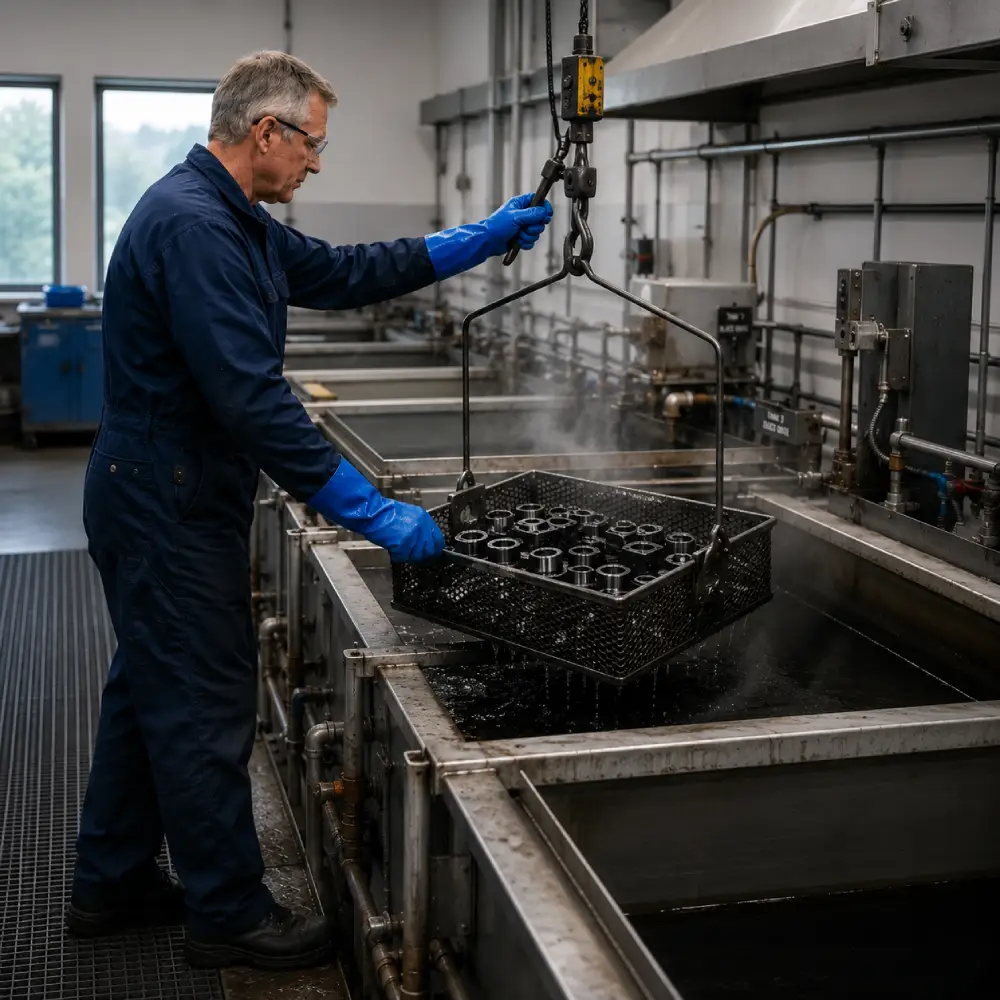
Integrated Manufacturing Capability
UK‑Based Reliability and Communication:
Controlled, Repeatable Processing:
Expertise in Precision Components:
Support for Complex and Specialist Projects
Manufacturers producing specialist tooling, bespoke assemblies or replacement parts benefit from Subcon’s engineering input and expertise throughout the process. The specialist team provides practical guidance on material suitability, machining considerations and finishing requirements, ensuring the final black oxide finish supports both appearance and function. Whether the project involves a one‑off prototype, a small batch or repeat production, Subcon Group provides the essential technical support required to achieve a dependable result.
End‑to‑End Quality Assurance
Every component processed by Subcon Group is reviewed, prepared, blackened, stabilised, sealed and inspected under a controlled quality system. This ensures the final finish meets the demands of workshop, tooling and machinery environments where consistency, durability and dimensional accuracy are essential. The result is a dependable, professional service that supports manufacturers who need accuracy, repeatability and a trusted engineering partner.
Why Partner With Subcon Group for Hot Chemical Blackening Service
Partnering with Subcon Group gives manufacturers access to a UK‑based engineering team that understands the full lifecycle of precision components, from machining and heat treatment through to final surface finishing. Hot chemical blackening is not seen as a standalone process, but as part of a wider, controlled manufacturing route that the Subcon Group delivers with consistency, accuracy and technical expertise.
Engineering Materials Used in Hot Chemical Blackening
Subcon Group expert workforce apply hot chemical blackening to a range of ferrous metals (metals containing iron). Making the process a very viable and strong option for many steel component applications in UK manufacturing, toolmaking, machinery production and precision engineering.
Carbon Steels and Mild Steels
Alloy Steels and Tooling Components
Precision-Machined Parts
Hot chemical blackening is widely used for blackening machined components because it does not behave like a heavy coating. Threads, bores, grooves, bearing seats, mating faces and other close-tolerance features can be finished without significantly affecting component fit. This makes chemical blackening an effective choice for precision component finishing, CNC machined parts finishing and low-build black oxide coating applications.
Real‑World Applications for Subcon Group Hot Chemical Blackening Services
Unlike traditional machining methods, CNC Routing uses computer numerical control technology to automate the movement of high-speed cutting tools across flat or large-scale materials. This advanced process means Subcon Group can offer precise cutting, profiling, pocketing, drilling and shaping of components, whilst maintaining tight tolerances and high production efficiency. There are a number of crucial stages involved in the process:
Aerospace & Defence Manufacturing
Aerospace tooling, fixtures and precision steel components often require a finish that remains dimensionally stable while supporting repeated handling. Subcon Group’s hot chemical blackening services provides a uniform, low‑glare surface that helps engineers to quickly and vitally identify alignment pins, collars, brackets and fasteners during assembly and inspection. Components such as shafts, spacers and CNC‑machined inserts retain accuracy thanks to the low‑build nature of the finish, making the process highly suitable for aerospace production cells, MRO facilities and defence‑grade machining environments.
Automotive & Vehicle Assembly
Industrial Machinery & Equipment Build
Tooling, Fixtures & Production Engineering
Fabrication, Welding and Metalworking Workshops
Maintenance, Repair and Overhaul (MRO)
Hot Chemical Blackening vs Other Surface Finishing Methods
In modern manufacturing, choosing the optimal surface treatment depends on the component application, the operating environment and the tolerances that must be maintained.
Where paint and powder coating can provide strong visual coverage, it may not be suitable for threaded parts, sliding fits or precision mating surfaces. Plating can provide enhanced corrosion resistance in certain applications, but it may introduce surface build-up that needs to be considered during design and manufacture.
Hot chemical blackening offers a different balance. It is commonly selected when a component needs a dark, uniform, low-build finish while retaining its original engineering accuracy. For precision steel components, CNC machined parts and tooling applications, black oxide treatment can be a highly practical finishing solution.
Subcon Group hot chemical blackening services give UK manufacturers a reliable option for ferrous metal finishing, precision component blackening and functional black oxide surface treatment. For parts that require a professional black finish without compromising accuracy, Subcon Group’s hot chemical blackening heat treatment remains a practical and effective solution.